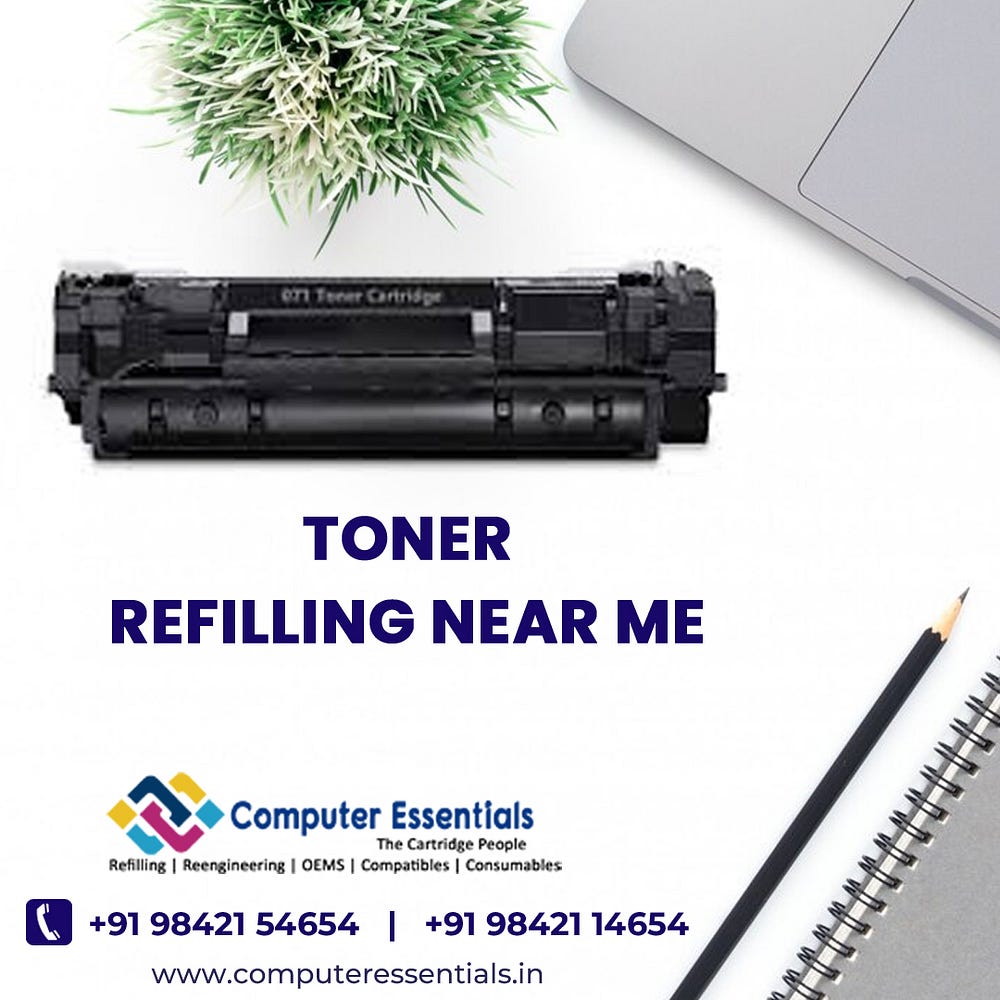
If you’ve ever hesitated before choosing a refill option, you’re asking the right question. Toner refilling is often marketed as a quick cost-saving fix, but safety depends entirely on how it’s done — not just the idea itself. For businesses searching for toner refilling near me, the real concern is not affordability, but whether refilling protects or slowly damages the printer. The answer is clear: refilling can be safe, but only when it follows the right process and is used in the right situation.
The Core Truth: Refilling Is Not the Problem, Poor Refilling Is
Many assume that refilling itself harms printers. In reality, damage occurs when cartridges are refilled without proper inspection, cleaning, or component replacement. A toner cartridge is not just a container of powder — it’s a mechanical unit with wear-prone parts like the drum, blade, and seals. Simply adding toner without addressing these components leads to performance issues. Safe refilling depends on treating the cartridge as a system, not a container.
Refilling vs Re-Engineering: The Difference That Decides Everything
Basic refilling involves opening the cartridge and adding toner. Re-engineering goes further — it includes cleaning internal components, replacing worn parts, and restoring the cartridge to near-original working condition. Most problems arise when businesses receive basic refilling but expect re-engineered performance. This gap creates print defects, leakage, and reduced lifespan. Understanding this difference helps you choose the right service instead of assuming all refills are equal.
When Toner Refilling Is a Smart Decision
Refilling works well in controlled environments where printing is consistent and predictable. It is ideal for internal documents, routine reports, and bulk printing where cost efficiency matters more than precision. When done correctly, refilling can significantly reduce cost-per-page without affecting day-to-day operations. The key is using a provider who follows a structured process rather than a quick refill approach.
When You Should Not Choose Refilling
Refilling is not suitable for every scenario. If your cartridge has already completed multiple cycles, internal components may be too worn to perform reliably. If your printing involves client-facing documents or detailed graphics, refilled cartridges may not deliver the consistency required. Printers that are highly sensitive to cartridge quality may also perform better with new or OEM cartridges. Knowing when not to refill is as important as knowing when to use it.
Hidden Risks That Businesses Often Overlook
The biggest risk is not immediate failure — it’s gradual inefficiency. Poor refilling can lead to toner leakage, faded prints, and increased wear on printer components. These issues don’t always appear instantly but build over time, leading to higher maintenance costs and unexpected downtime. Another overlooked factor is toner quality — low-grade toner powder affects print clarity and internal performance.
How to Identify a Safe Refilling Process
A reliable refilling service follows a clear sequence: inspection of the cartridge, cleaning of residual toner, replacement of worn components if necessary, refilling with quality toner, and testing before delivery. If any of these steps are skipped, the refill is incomplete. Asking the right questions about the process is more important than comparing prices.
Why Vendor Choice Matters More Than the Refill Itself
The safety of refilling is directly linked to the expertise of the provider. A knowledgeable vendor understands cartridge cycles, component wear, and printer compatibility. When businesses search for toner refilling near me, selecting a provider based on process transparency and consistency ensures better outcomes than choosing based on convenience alone.
A Smarter Approach: Use Refilling as Part of a Strategy
Instead of treating refilling as a default option, integrate it into a broader printing strategy. Use refilled cartridges for internal, high-volume tasks, and reserve new cartridges for precision work. Monitor cartridge performance across cycles and replace them when efficiency drops. This balanced approach maximizes savings while maintaining reliability.
The Bottom Line: Safe When Done Right, Costly When Done Wrong
Toner refilling is neither inherently safe nor unsafe — it depends on execution and context. Businesses that understand the difference between basic refilling and proper re-engineering make better decisions and avoid hidden costs. When approached with clarity and control, refilling becomes a powerful tool for reducing expenses without compromising performance.
The real advantage is not just saving money — it’s knowing exactly when refilling works for you and when it doesn’t.
Website: www.computeressentials.in
Email: info@ computeressentials.in
Call Us: +91 98421 54654, +91 98421 14654
Reach Us: 94,T.P.K. Main Road, Andalpuram, Madurai-625003.
#MaduraiLife #PrintingCosts #SmartSaving2026 #PrinterTips #InkManagement #OfficeLifeIndia #EverydayExpenses #CostAwareness #TechHabits #LocalInsights #ComputerEssentials


No comments:
Post a Comment