Thursday, August 27, 2026

Before You Replace It, Try Toner Refilling: A Practical Guide for Local Printer Users


There is a particular kind of frustration that comes with seeing a printer suddenly stop producing good pages. You print an important document, look at the paper, and notice the text is faint, patchy, or uneven. Your first thought is usually simple: “The toner is finished. I need a new cartridge.” It feels like the obvious solution, much like throwing away an almost-empty pen because the ink has stopped flowing properly. But sometimes, the problem is not that the whole cartridge needs to be replaced. Sometimes, the solution is as simple as refilling it.

For people who use printers regularly at home, in small offices, shops, schools, or local businesses, toner refilling can be a practical alternative worth understanding. It is not about blindly choosing refills every time. It is about knowing what is actually happening inside that little cartridge before deciding that it belongs in the bin.

A toner cartridge is a little more complicated than it looks. It contains toner powder and several internal components that work together to transfer that powder onto paper. Over time, the toner gets used up, but the cartridge itself may still have plenty of useful life left. It’s much like using a reusable water bottle — you refill it rather than replace it. When the water is gone, you do not necessarily throw away the bottle. You refill it because the container is still doing its job.

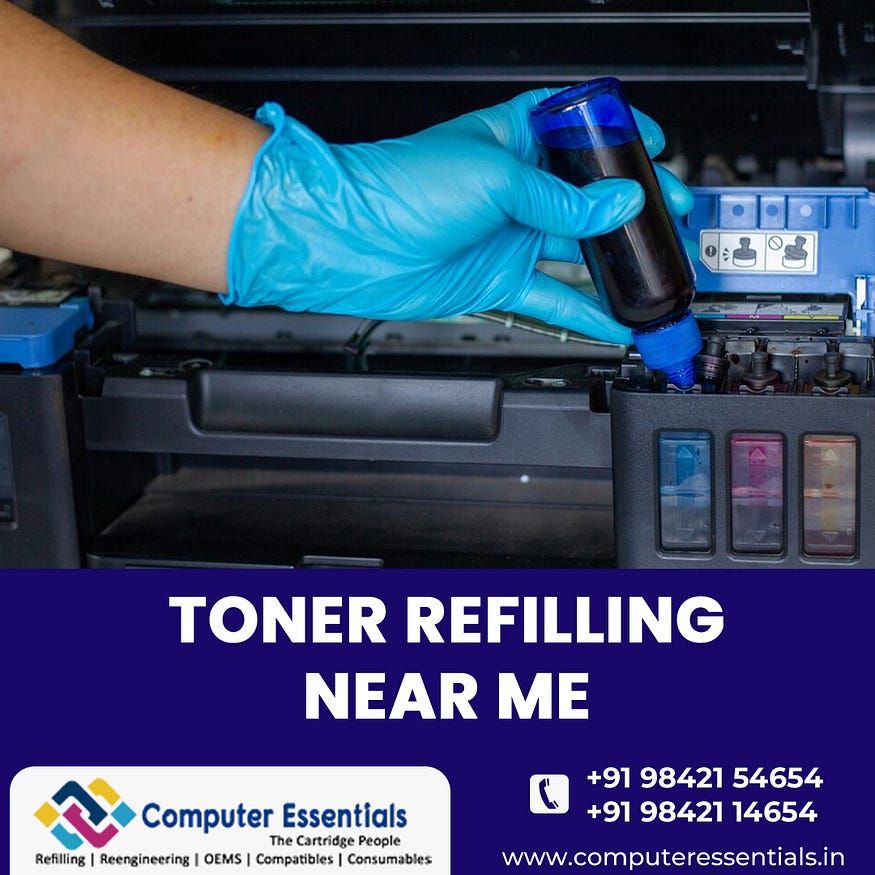
This is where searching for toner refilling near me can become useful, especially when the printer is otherwise working normally. A nearby technician can examine the cartridge, check its condition, refill the toner where appropriate, and identify whether other parts need attention. The important part is understanding that refilling is not simply about pouring powder into an empty container and putting it back into the printer.

Different cartridges have different designs, toner requirements, and internal components. A cartridge that has been refilled several times may eventually need more than just toner. Certain parts can wear out through repeated use, and poor-quality toner or improper handling can affect print quality. That is why the condition of the cartridge matters just as much as the amount of toner inside it.

You can often notice clues from the printed page. Faded text may suggest that the toner is running low, while repeated marks, lines, spots, or uneven printing may point to another issue. Sometimes gently checking the cartridge and printer according to the manufacturer’s instructions can help identify what is happening. In other cases, the cartridge may simply have reached the point where replacement makes more sense.

There is also a very practical reason local users consider refilling: cost. For someone who prints only a few pages a month, the difference may not feel significant. But imagine a small office printing invoices, bills, forms, quotations, and records every day. The pages add up before you know it. Reusing a cartridge when it is still in reasonable condition can sometimes make more sense than replacing the entire unit every time the toner runs out.

The environmental side is worth thinking about too. A cartridge is not just a plastic object. It contains several components and materials that become waste when the entire unit is discarded. Refilling does not make printing waste-free, of course, but extending the useful life of an existing cartridge can be a more resource-conscious choice when the cartridge is still suitable for reuse.

This kind of decision comes up often in ordinary computer-service environments, especially when printer users wonder, “Do I really need a new cartridge?” Not necessarily. In many cases, it makes sense to inspect the existing cartridge first and see whether it can still be useful before buying a replacement.

Another thing people often overlook is print volume. If a cartridge is being refilled frequently, it may be worth looking at how much the printer is actually being used. A household printer that prints occasionally has different needs from a small business printer running dozens or hundreds of pages a week. Understanding that difference can help people make better decisions about maintenance, cartridge life, and running costs.

It is also important not to judge toner refilling only by the immediate price. A very cheap refill that produces poor-quality prints or causes problems inside the printer may not really be cheaper in the long run. On the other hand, replacing a perfectly usable cartridge every time the toner runs low can also be unnecessary. The sensible middle ground is to consider the cartridge’s condition, print quality, printer model, and actual usage.

For anyone wondering whether toner refilling near me is worth considering, the better question may be slightly different: “Is my cartridge still worth keeping?” That question shifts the focus from simply buying or refilling to understanding what the printer actually needs.

Sometimes, the answer will be replacement. Sometimes, it will be a refill. And sometimes, the real issue may be the printer itself rather than the toner cartridge.

Printers are ordinary machines, but they have a way of reminding us that not everything that looks finished is actually useless. A low toner warning can feel like a signal to replace something immediately, yet a closer look may reveal that part of the system still has plenty of life left.

In a world where replacing things has become almost automatic, taking a moment to inspect, repair, refill, and reuse can be a surprisingly sensible habit. It saves resources, avoids unnecessary waste, and sometimes saves money too. More importantly, it encourages a different way of thinking: before deciding that something is finished, take a closer look. Sometimes it is not asking to be replaced. It is simply asking for another chance to do its job.

Website: www.computeressentials.in

Email: info@ computeressentials.in

Call Us: +91 98421 54654, +91 98421 14654

Reach Us: 94,T.P.K. Main Road, Andalpuram, Madurai-625003.

#TonerRefilling #PrinterMaintenance #PrinterCare #LocalPrinterUsers #PrintingTips #OfficePrinting #ComputerEssentials

Toner Refilling Near Me in 2026: Smart Tips to Get Better Prints for Less


A few months ago, I noticed something strangely familiar at home. The printer was working, the paper was feeding normally, and there were no warning lights flashing. Yet the documents coming out looked tired. The black text that should have been sharp had started appearing grey, and some letters looked as though they had spent too much time in the sun. It was one of those small household problems that somehow became surprisingly annoying.

The first thought is usually simple: “I probably need a new toner cartridge.” But replacing a cartridge every time the print quality drops can be a little like throwing away a perfectly good water bottle just because it is empty. Sometimes, what you actually need is a refill rather than a replacement.

That is where the search for toner refilling near me often begins. In 2026, toner refilling is still a practical option for people who print regularly, especially in homes, small offices, tuition centres, shops, and workplaces where printers quietly handle dozens of pages every day.

Why Toner Refilling Makes Sense

Think about a printer cartridge like a reusable lunch box. The container itself may still be perfectly usable even when what is inside has run out. A toner cartridge can work in a similar way. Depending on the cartridge and printer model, it may be possible to refill the toner powder instead of replacing the entire cartridge.

For someone who prints occasionally, this difference might not feel important. But for a person printing invoices, school worksheets, reports, bills, or office documents every week, the small savings can add up over time.

There is also something satisfying about using an item for as long as it remains useful instead of automatically replacing it.

Not Every Refill Gives the Same Result

This is where things get slightly more complicated.

A refill is not simply a matter of putting toner powder into an empty cartridge and calling it done. Different cartridges have different designs, components, capacities, and printing characteristics. Some cartridges may also have parts that wear out with repeated use.

Imagine using the same pair of shoes for years. Replacing the shoelaces may solve the problem for a while, but eventually the sole itself may become worn. Toner cartridges can be similar. A refill can restore the toner supply, but it cannot magically make every internal component new.

That is why print quality after refilling can vary. If the cartridge is still in good condition, the result may be perfectly satisfactory. If important components have become worn, you might notice faded areas, streaks, uneven darkness, or repeated marks on the page.

The Printer Model Matters More Than People Think

One common mistake is thinking that all black toner cartridges are basically the same.

They are not.

A cartridge designed for one printer model may not be suitable for another, even when the cartridges look almost identical. The toner formulation, cartridge design, chip, drum, and other components can differ.

It is a little like buying a phone charger. Two chargers may have the same general appearance, but that does not necessarily mean they are interchangeable.

Before getting a cartridge refilled, knowing the exact printer model and cartridge number can save a lot of confusion. A quick look at the label on the cartridge or printer can provide useful information.

What About Print Quality?

For many people, print quality is the real concern.

Saving money is useful, but not if every printed page looks like it was produced during a power cut.

A good refill should ideally produce consistent text from the first page to the last. Black areas should look reasonably even, fine letters should remain readable, and the page should not develop unexplained streaks or repeated smudges.

If the first few pages look excellent but the quality gradually becomes inconsistent, the issue may not simply be the amount of toner. Other cartridge components or printer maintenance may be involved.

Sometimes the printer itself is the forgotten character in the story.

A Small Cleaning Habit Can Make a Difference

Printers are surprisingly good at collecting tiny amounts of dust and toner residue.

You may not notice it because everything happens inside a closed machine. But over time, accumulated residue can affect how cleanly pages are produced.

This does not mean opening the printer and touching every internal component. In fact, randomly cleaning sensitive parts can create more problems. It simply means that routine maintenance should not be ignored.

A printer that receives occasional attention can often behave much better than one that is only remembered when something goes wrong.

Local Refilling Is Often About Convenience Too

When someone searches toner refilling near me, the motivation is not always about getting the cheapest possible option.

Sometimes it is simply about avoiding the hassle of buying another cartridge, waiting for delivery, checking compatibility, and dealing with packaging.

There is something comforting about taking the cartridge to a nearby place and getting the situation understood in person. You can explain the printing problem, show a sample page, and ask whether the cartridge itself appears reusable.

In a world where almost everything can be ordered with a few taps, that simple human interaction can still be useful.

A Quiet Example From Everyday Office Life

I have seen this kind of situation around small businesses too. A printer may sit quietly in a corner for months, doing nothing particularly exciting. Then suddenly, the office needs 200 invoices, a stack of forms, or a set of reports.

That is when everyone remembers the printer.

Even a small business such as Computer Essentials can encounter the same ordinary reality: printers are rarely appreciated when they work perfectly, but everyone notices them when the pages suddenly become faint.

It is a reminder that office technology does not always need to be replaced just because something has stopped performing perfectly.

When Refilling May Not Be the Best Choice

Refilling is not automatically the right answer every time.

If a cartridge has been refilled repeatedly and continues producing poor-quality pages, replacing it may eventually make more sense. The same applies when a cartridge is physically damaged or when its internal components have reached the end of their useful life.

There is also a difference between printing a few personal documents and printing professional materials where appearance matters greatly. A slightly uneven page may be acceptable for an internal note but not for an important presentation or customer-facing document.

The sensible approach is not to treat refilling as a rule. It is to look at the cartridge, the printer, the type of work being printed, and the actual quality needed.

The Bigger Picture Behind a Small Cartridge

There is a larger idea hidden inside this very ordinary printer problem.

We live in a time when replacing things is often easier than repairing them. A device becomes slow, a component wears out, or an accessory runs empty, and the first instinct is frequently to buy another one.

Sometimes, what matters most is not whether it’s complete, but whether it still has value.

A toner cartridge is a small object, but the decision around it reflects a bigger habit. Reuse what can reasonably be reused. Replace what genuinely needs replacing. Spend money where it improves something, rather than spending simply because something has become inconvenient.

That does not mean every old cartridge should be kept forever. It means making the decision thoughtfully.

Conclusion

Toner refilling is not a complicated idea, but making a good choice requires looking beyond the price of a refill. The printer model, cartridge condition, print quality, maintenance, and type of printing all matter.

Sometimes a refill is enough to bring an ordinary printer back to doing what it does best: quietly producing clear pages without demanding much attention.

And perhaps that is the most useful way to think about everyday technology. Not everything that appears done is truly done. Some things simply need a little care, a little understanding, and the chance to be useful again.

Website: www.computeressentials.in

Email: info@ computeressentials.in

Call Us: +91 98421 54654, +91 98421 14654

Reach Us: 94,T.P.K. Main Road, Andalpuram, Madurai-625003.

#TonerRefilling #PrinterCare #PrinterMaintenance #BetterPrinting #OfficePrinting #PrintingTips #SmartPrinting #CostSavingTips #SustainablePrinting #ComputerEssentials

Toner Refilling Near Me: What to Check Before Refilling Your Cartridge


There’s a particular kind of frustration that happens when a printer suddenly decides it has had enough. You’re in the middle of printing something important, the pages start coming out pale, and the first thought is usually, “I need toner refilling near me.” It sounds like a simple errand. Take the cartridge somewhere, get it refilled, put it back, and carry on.

But a toner cartridge is a little like a water bottle you keep reusing. Just because it can be filled again doesn’t necessarily mean it should be filled in exactly the same way every time. The condition of the bottle matters, what goes inside matters, and sometimes the problem isn’t the empty bottle at all.

That is why a few simple checks before refilling can save you from repeating the same printer problem a few days later.

Start With the Cartridge, Not the Toner

When a printout becomes lighter, it is easy to assume the cartridge is simply empty. Sometimes that is true. But cartridges contain several working parts, and they gradually wear out.

The drum, for example, plays an important role in transferring the image onto paper. Other internal components help move and distribute toner. If one of these parts is damaged or worn, adding fresh toner may not solve the problem.

It is similar to filling fuel into a car with a damaged engine. The fuel may be perfectly fine, but it cannot fix a completely different problem.

Before refilling, the cartridge should be checked for cracks, damaged components, excessive wear, or signs of leakage.

Make Sure You Have the Right Cartridge

Printers can look surprisingly similar, and toner cartridges can be just as confusing.

Two cartridges may have almost identical shapes while being designed for different printer models. Even cartridges from the same manufacturer can have different capacities or internal designs.

Checking the cartridge model number before refilling is therefore worth the few extra seconds. It prevents the common situation where someone confidently says, “This should fit,” only to discover later that the printer does not recognise it properly or the print quality is inconsistent.

The model number is usually printed directly on the cartridge or its label, making it much easier to verify than trying to identify it by appearance alone.

Ask What Is Actually Being Replaced

Refilling does not always mean simply adding toner powder.

Depending on the cartridge, other components may need attention. A worn drum, damaged blade, or other internal part can affect printing even when the cartridge contains plenty of toner.

This is one reason two refilled cartridges can behave completely differently. One may work beautifully because the cartridge was still in good condition. Another may produce streaks, faded areas, grey backgrounds, or repeated marks because an ageing component was already causing trouble.

A useful habit is to understand what the cartridge actually needs rather than assuming every refill is the same.

Pay Attention to Print Quality Before the Refill

If possible, keep one or two pages from the last print job before refilling.

Look at them closely.

Are the pages uniformly faded? Is there a difference in darkness between the two sides? Are there black lines running down the page? Are there repeated spots appearing in the same place?

These details can tell a story.

For instance, an evenly faded page may simply point toward low toner. Repeated marks in the same position can suggest a problem with another cartridge component. Uneven printing may indicate distribution or mechanical issues.

It is a bit like noticing how a ceiling fan is behaving before calling someone to repair it. The sound, speed, and movement can provide clues about what is actually wrong.

Check for Leakage and Excess Toner

A cartridge should not normally leave toner everywhere.

If there is loose powder around the cartridge, visible leakage, or an unusual amount of toner inside or outside the housing, it is worth getting the cartridge examined before proceeding.

Toner is extremely fine, and a small amount can spread farther than expected. A messy refill can create problems not only inside the cartridge but also around the printer.

Clean handling matters just as much as the refill itself.

Remember That Printer Problems Are Not Always Cartridge Problems

This is perhaps the easiest thing to overlook.

Sometimes a printer produces poor-quality pages because of the printer itself rather than the cartridge. Paper quality, printer settings, dirty internal components, or other maintenance issues can all affect the final result.

That is why replacing or refilling a cartridge repeatedly without understanding the original problem can become an expensive cycle.

Think about changing a light bulb when the real issue is the electrical connection. The new bulb might work for a while, but the underlying problem has not disappeared.

Refill Quality Can Affect the Final Result

Not all toner powder is necessarily identical.

Different cartridges are designed around particular toner characteristics, and using unsuitable toner can contribute to poor print quality or inconsistent results.

This does not mean the most expensive option is automatically the best one. It simply means the refill should be appropriate for the specific cartridge and printer.

Even in everyday situations, matching the right ingredient to the right recipe makes a difference. You can have perfectly good ingredients, but the wrong combination still produces a disappointing result.

Pay Attention to How the Cartridge Is Handled

The refill itself is only part of the process.

Cartridges should be handled carefully because internal components can be sensitive to scratches, contamination, or rough handling. The outside may look like a simple plastic container, but there is more going on inside.

A cartridge that is opened, cleaned, refilled, and reassembled carefully has a better chance of performing consistently than one treated like an ordinary container.

This is one of those small details people rarely think about until something goes wrong.

A Simple Example From Everyday Life

Imagine using the same lunch box every day for several months.

One day, the lid stops closing properly. You could keep putting food inside and hope for the best. Or you could first check whether the hinge is broken, whether the seal has worn out, or whether something is preventing it from closing.

A toner cartridge deserves the same kind of practical thinking.

Refilling is useful, but it is not magic. It works best when the cartridge itself is still suitable for another cycle of use.

In everyday printer situations, even a familiar local name such as Computer Essentials can become part of the background of how people think about routine computer and printing maintenance. The important part, however, is not the name of the place. It is understanding what your particular cartridge needs.

What Should You Check Before Refilling?

Before searching for toner refilling near me, take a moment to check the cartridge model, its physical condition, recent print quality, signs of leakage, and whether the printer itself is functioning normally.

If the cartridge has been refilled several times already, its age and internal wear are also worth considering. Sometimes continuing to refill an old cartridge is less sensible than replacing it.

The goal is not simply to get more toner into the cartridge. The goal is to get reliable printing from the cartridge afterward.

The Small Checks That Prevent Bigger Frustrations

Printer problems rarely arrive at a convenient time. They usually appear when a document needs to be printed immediately, when a form has a deadline, or when someone is already rushing out the door.

That is why a few quiet checks beforehand can make such a difference.

A toner cartridge may look like a small, replaceable object, but it sits at the centre of a process involving powder, moving parts, electrical signals, paper, and the printer itself. Understanding that process just a little changes the way we approach refilling.

Instead of thinking, “It is empty, so fill it,” we start thinking, “What is actually happening here?”

And that small shift in thinking can save money, reduce waste, prevent repeated printing problems, and make an ordinary household or office task feel much less frustrating.

In the end, good printer maintenance is not really about the cartridge alone. It is about the people depending on that little machine to quietly do its job when they need it most. Sometimes the smartest solution is simply to pause, look a little closer, and fix the actual problem rather than rushing to replace what appears to be empty.

Website: www.computeressentials.in

Email: info@ computeressentials.in

Call Us: +91 98421 54654, +91 98421 14654

Reach Us: 94,T.P.K. Main Road, Andalpuram, Madurai-625003.

#TonerRefilling #PrinterMaintenance #TonerCartridge #PrinterCare #PrintingTips #OfficeMaintenance #ComputerEssentials #PrinterProblems #TonerTips #EverydayTechnology

Low Print Quality or Empty Toner? What to Check Before Buying a New Toner Cartridge


It has a habit of happening at the worst possible time. You print an important document, glance at the page, and notice that the words look faded. Maybe the text is darker on one side, or the middle of the page looks almost blank. Your first thought is simple: “The toner is finished. I need a new cartridge.” But sometimes, that conclusion is a little too quick.

Think about it like a water bottle. If the water is not coming out properly, you would not immediately throw away the bottle and buy another one. You might first check whether the cap is blocked, whether the bottle is squeezed, or whether there is actually any water left inside. A printer deserves the same kind of small investigation.

Low print quality can happen for several reasons, and an empty toner cartridge is only one of them. Before spending money on a replacement, it helps to understand what your printer is actually trying to tell you.

Start With What the Printed Page Looks Like

The printed page often gives you clues.

If the entire page looks consistently pale, the toner level may genuinely be getting low. Imagine writing with a pencil that has become very dull. You can still see the words, but they are no longer as dark or sharp as they were before.

But if only certain areas are faded, the problem may be different. A vertical white line running down every page, for example, can point toward an issue with the toner cartridge or the way toner is being distributed. Repeated marks, spots, or grey patches may also suggest something other than simply “empty toner.”

This is why looking at the pattern matters. The page itself is often the first diagnostic tool.

Check the Toner Level Before Replacing Anything

Modern printers usually provide some indication of toner remaining. Depending on the printer model, you may see the level on the printer display or through the computer’s printer settings.

It is worth checking this before ordering a cartridge.

Sometimes the printer warns that toner is low even though you can still print several useful pages. In other situations, the warning may appear because the cartridge has reached a manufacturer-defined threshold rather than because absolutely no toner remains.

There is also an important difference between “low toner” and “empty toner.” They sound similar, but they are not necessarily the same situation.

If the cartridge is genuinely empty and pages are consistently coming out extremely faint, replacement may make sense. If the printer says toner is low but the pages still look reasonably good, there may be no immediate reason to replace it.

Give the Cartridge a Simple Check

A toner cartridge is not a complicated mystery box, but it does contain moving and sensitive components.

If the cartridge is removable, turn the printer off according to the manufacturer’s instructions and inspect it carefully. Look for obvious signs such as toner leakage, damage, cracks, or anything that appears out of place.

In some printer models, gently redistributing the remaining toner may temporarily improve printing when the toner is running low. However, this should only be done according to the printer or cartridge manufacturer’s guidance. Handling toner carelessly can create a bigger mess than the original printing problem.

This is one of those situations where patience saves money. A few minutes of checking can be better than immediately throwing away something that still has useful life left.

Don’t Forget the Printer Settings

Sometimes the cartridge gets blamed for something caused by the printer settings.

Many printers have different print-quality or toner-saving modes. Draft mode, economy mode, or toner-saving settings can intentionally use less toner, which may make text appear lighter.

It is a bit like turning down the brightness on your phone and then assuming the screen is broken. The screen has not necessarily failed; it may simply be operating differently.

Before buying a new cartridge, check whether the printer has been switched to an economy or draft setting. If the setting changed accidentally, restoring the normal print mode could solve the problem without replacing anything.

Try a Different Document

This small test can tell you more than you might expect.

Print a simple document containing ordinary black text. If that page looks clear but another document looks faded, the problem may be related to the original file, document settings, or how the content was created.

On the other hand, if every document comes out with the same pale or uneven appearance, the printer or toner system becomes a more likely suspect.

This is similar to testing a light bulb by plugging it into another socket. You are not fixing anything yet; you are simply narrowing down where the problem might be.

Look at the Drum and Other Printer Components

Not every print-quality problem comes from toner.

Laser printers typically use other components, including a drum, to transfer the image onto paper. Depending on the printer design, the drum may be part of the toner cartridge or a separate replaceable component.

If the toner level looks fine but the print still has repeating marks, lines, smudges, or uneven areas, the issue could involve another component.

This is where repeatedly replacing toner can become frustrating. Imagine changing the batteries in a perfectly working remote control when the actual problem is the television. You keep spending money, but the real cause remains untouched.

Paper Can Also Affect Print Quality

Paper is easy to overlook because it seems so basic.

Damp, unsuitable, damaged, or poor-quality paper can sometimes affect how a laser printer handles printing. If you have recently changed paper, noticed that sheets feel unusually soft, or stored paper in a humid environment, it is worth considering whether the paper is contributing to the problem.

For people who regularly print invoices, forms, schoolwork, office documents, or personal records, keeping paper stored properly can make a surprisingly noticeable difference.

If You Still Need a Replacement, Check the Exact Cartridge

Once you have ruled out the simpler possibilities and the toner really does need replacing, do not rely only on the printer brand.

The exact printer model matters.

Two printers from the same manufacturer can use completely different toner cartridges. Even cartridges that look almost identical may not be interchangeable.

This is especially important when searching for something such as Buy toner cartridges in madurai. Before comparing prices or choosing a cartridge, check the printer model number and the cartridge number printed on the existing cartridge or listed in the printer documentation.

A small number printed on a label can prevent a surprisingly expensive mistake.

Think About What Happened Before the Problem Started

There is another useful question that often gets ignored: “When did the problem begin?”

Did the printer suddenly start producing faded pages after replacing the cartridge? Did the print gradually become lighter over several weeks? Did the printer sit unused for a long period? Did someone change the print settings?

The timeline can provide valuable clues.

For example, gradual fading across many pages is a different story from suddenly getting streaky pages immediately after installing a new cartridge. In the same way that a mechanic asks what happened before a car started making a strange noise, understanding the sequence can help identify the cause.

Even businesses that regularly handle printers, such as Computer Essentials, may encounter situations where the obvious assumption is not necessarily the actual cause. Sometimes a little troubleshooting tells you more than immediately replacing a component.

New Does Not Always Mean Necessary

There is a natural temptation to replace things when they stop working perfectly. We do it with phones, cables, batteries, kitchen appliances, and sometimes even printers.

But a faded page does not automatically mean a dead cartridge.

Taking a few minutes to check the toner level, print settings, paper, cartridge condition, and overall print pattern can help you decide whether replacement is actually necessary. If replacement is needed, checking the exact model and cartridge number before purchasing becomes the next sensible step.

For anyone searching Buy toner cartridges in madurai, that basic checking process is worth remembering. The goal is not simply to find another cartridge. It is to understand whether another cartridge is what you actually need.

A Small Printer Problem Can Teach Us Something Bigger

A printer producing a faded page can feel like a tiny inconvenience, but it is also a good reminder of how easily we jump from a symptom to a solution.

The page looks faint, so we assume the toner is empty. The printer slows down, so we assume it is old. Something stops working, so we replace it.

Sometimes that is exactly the right decision. But sometimes the answer is hidden in a setting, a piece of paper, a worn component, or simply a cartridge that still has some life left.

A few minutes of attention can prevent unnecessary spending and unnecessary waste. And perhaps that is the most useful lesson here: before replacing something, understand it. Whether it is a printer, a household appliance, or a problem in everyday life, the first explanation is not always the right one. Often, the better answer begins with simply looking a little closer.

Website: www.computeressentials.in

Email: info@ computeressentials.in

Call Us: +91 98421 54654, +91 98421 14654

Reach Us: 94,T.P.K. Main Road, Andalpuram, Madurai-625003.

#PrinterTroubleshooting #PrintQuality #LaserPrinter #OfficePrinting #PrintingTips #PrinterCare #Madurai #ComputerEssentials #TonerCartridge #PrinterTips

Printer Cartridge Emergency? How Offices Can Get the Right Cartridge Fast Without Buying the Wrong One

  A printer running out of toner at the wrong time can turn a routine office task into an immediate operational problem. When documents need...